
Sanjiesan World · Independent vertical publication
Give every room a point of view.
Room ideas and design analysis for gaming rooms, anime rooms, media rooms, reading nooks, creator studios, compact spaces, seating, lighting, and storage.
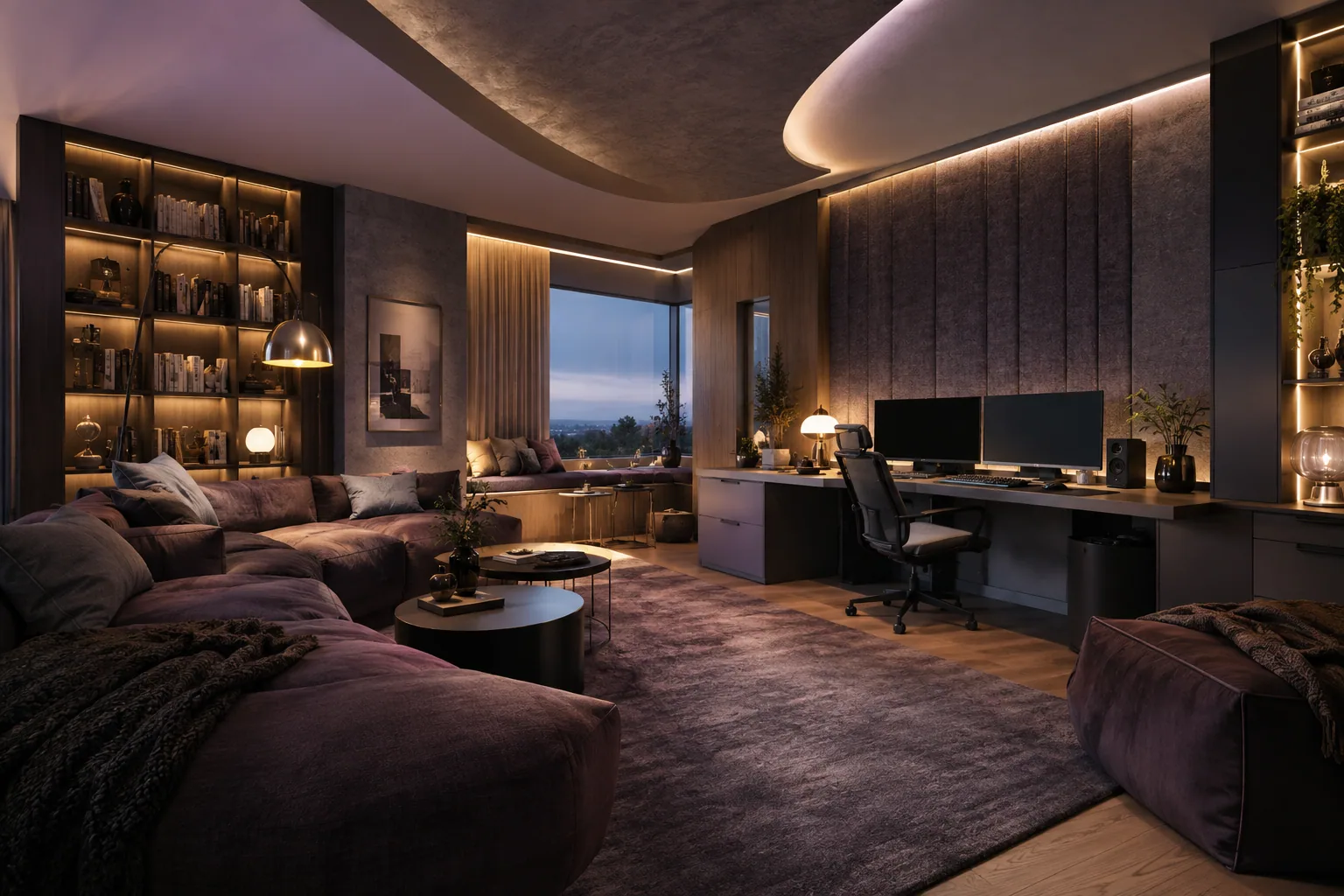
Editorial desk
A clearer way to think about gaming rooms
Latest field notes
View all articles →Start with these space inspiration guides
 Gaming Room
Gaming Room
Gaming Room: A practical guide
A decision-focused a practical guide for gaming room, covering scope, sequence, and decision points, evidence, trade-offs, and a documented next step.
Read article → Gaming Room
Gaming Room
Gaming Room: Inspiration study
A decision-focused inspiration study for gaming room, covering references, visual grammar, constraints, and transformation, evidence, trade-offs, and a documented next step.
Read article → Gaming Room
Gaming Room
Gaming Room: Creative method
A decision-focused creative method for gaming room, covering a repeatable path from question to artifact, evidence, trade-offs, and a documented next step.
Read article →Topic navigation
Explore Space Inspiration by topic
10 focused desks organize the published guidance and scheduled coverage for Space Inspiration.
Gaming Room
Published guides, checklists, and practical analysis for gaming room.
Open topic →Media Room
Published guides, checklists, and practical analysis for media room.
Open topic →Anime Room
Published guides, checklists, and practical analysis for anime room.
Open topic →Reading Nook
Published guides, checklists, and practical analysis for reading nook.
Open topic →Creator Studio
Published guides, checklists, and practical analysis for creator studio.
Open topic →Compact Space
Published guides, checklists, and practical analysis for compact space.
Open topic →Sofa Seating
Published guides, checklists, and practical analysis for sofa seating.
Open topic →Ambient Lighting
Published guides, checklists, and practical analysis for ambient lighting.
Open topic →Acoustics
Published guides, checklists, and practical analysis for acoustics.
Open topic →Storage Display
Published guides, checklists, and practical analysis for storage display.
Open topic →Latest resources
Open the library →Start at the editorial desk
Practical briefing
A clearer way to think about gaming rooms
Good decisions begin with a defined question, comparable evidence, and a next step that fits the real situation.
01
Define the decision before collecting more information.
02
Separate verified facts from assumptions and promotional claims.
03
Keep a short record of what changed, when, and why.